
GT Makhana for Bone Density: Building Stronger Bones, Day by Day
Why Bone Density Matters?????
Your bones do much more than hold you upright. They protect your organs, anchor your muscles, and store calcium and phosphorus that your body draws on every day. Bone density is how much mineral is packed into your bones. Higher density means stronger, harder-to-break bones.
Your body keeps rebuilding bone throughout life. Old bone is broken down and new bone is laid down in its place. Until about your late twenties or early thirties, you build more than you lose. After that, bone loss slowly outpaces bone building, and it speeds up in women after menopause. This is why what you eat now matters, because it helps decide how well your bones hold up later.
What a Strong Bone Structure Does for Your Body
1. Steady, confident movement
Strong bones, together with healthy muscles and joints, let you walk, climb stairs, lift and play without strain.
2. Fewer fractures and injuries
Bones with good density are more resistant to breaks from everyday falls and knocks. Low bone density (osteopenia, and in advanced cases osteoporosis) makes fractures far more likely, and it often causes no symptoms until a bone breaks.
3. Better posture and an upright frame
The spine is a stack of bones. Healthy density helps it keep its shape and support your posture as you age.
4. A reliable mineral reserve
Your body keeps nearly all its calcium in the bones. The blood level of calcium, which your nerves and muscles need, is held steady by drawing on this store, so keeping the store full matters.
5. Independence as you age:-
Strong bones help you stay mobile and self-reliant in later life, which is one of the biggest quality-of-life benefits of all.
What Your Bones Need
No single food builds bone. It takes a team of nutrients and habits:
- Calcium, the main building mineral.
- Vitamin D, which helps you absorb calcium (sunlight is the main source).
- Phosphorus and magnesium, which work with calcium in the bone structure.
- Protein, which forms the framework that minerals attach to.
- Vitamin K, found in leafy greens, which supports bone proteins.
- Weight-bearing exercise, such as walking, climbing stairs or strength training, which signals bones to stay strong.
Where Makhana Fits In
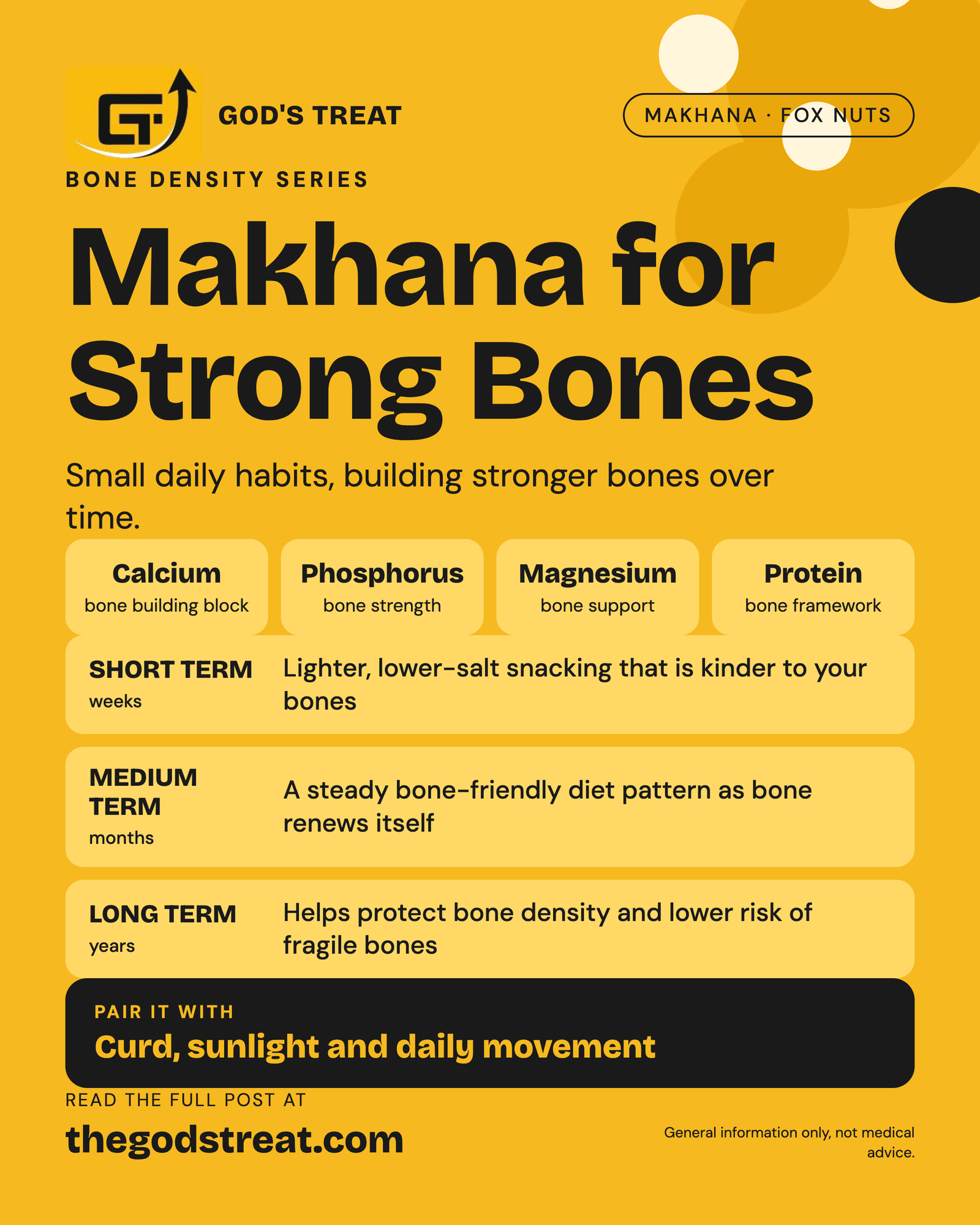
Makhana is a modest contributor, not a calcium powerhouse. Foods like milk, curd, paneer, ragi and sesame seeds provide much more calcium per serving. Research on makhana’s effect on bone density specifically is limited. What makhana offers is a useful supporting role:
- It contains calcium, phosphorus and magnesium, the minerals bones are made of, in modest amounts.
- It provides some plant protein, which supports the bone framework.
- It is naturally low in sodium when roasted plainly. A high-salt diet makes the body lose more calcium through urine, so swapping salty, fried snacks for plain roasted makhana is a quiet bone-friendly choice.
- It is light and nourishing, so it makes an easy replacement for processed snacks that add calories but few minerals.
- It pairs well with calcium-rich foods like curd or milk, which is the best way to use it for bone health.
Benefits Over Time: What to Expect
Bone changes slowly, so it helps to be realistic about timelines.
Short term (days to weeks)
- A lighter, lower-salt snack habit, which means less calcium loss through excess sodium.
- A small daily top-up of bone minerals and protein.
- Feeling comfortably full without heavy, oily food, which makes it easier to keep eating well.
- Don’t expect: any change in bone density yet. This stage is about building the habit.
Medium term (3 to 6 months)
- Bone renewal works in cycles lasting a few months, so a steady bone-friendly diet starts to matter here.
- Regular nutrient intake supports muscle strength, which protects bones by improving balance and reducing falls.
- Combined with sunlight, calcium-rich foods and exercise, you give your body consistent raw material to build bone.
- Don’t expect: a visible or felt change. Bone density is only measured by a scan (DEXA), usually not repeated more often than every year or two.
Long term (years)
- Consistent habits help you reach and hold peak bone mass in your younger years and slow bone loss later.
- Better density lowers the risk of fragile bones and fractures as you age.
- Staying mobile and active over the years protects independence and quality of life.
- Remember: makhana helps as part of an overall pattern, not on its own. The biggest long-term protection comes from adequate calcium and vitamin D, exercise and avoiding smoking and excess alcohol.
Habits That Protect Your Bones Beyond Makhana
- Include calcium-rich foods daily: curd, milk, paneer, ragi, sesame seeds, green leafy vegetables.
- Get 15 to 20 minutes of morning or late-afternoon sunlight where possible, and ask your doctor about vitamin D testing, since deficiency is very common.
- Do weight-bearing exercise such as brisk walking, stair climbing or light strength training.
- Limit excess salt, soft drinks and caffeine, which can increase calcium loss.
- Avoid smoking and heavy alcohol, both of which weaken bone.
- Eat enough protein from dal, pulses, dairy and nuts.
- Get checked if you are over 40 to 50, post-menopausal, or have a family history of osteoporosis.
Final Thoughts
Strong bones are built quietly, one meal and one walk at a time. Makhana will not build bone by itself, but as a light, low-salt, mineral-containing snack that pairs well with curd, it is an easy and enjoyable habit to add to a bone-friendly routine.
Explore our roasted and raw makhana range at thegodstreat.com.